

Patient Impact
As a chronic disease, gMG requires lifelong management1
While generalized myasthenia gravis (gMG) disease recognition, diagnosis, and treatment have improved, challenges remain in the management of gMG, which can lead to substantial disease burden for patients

Uncontrolled symptoms are common, with ~54% of patients experiencing moderate-to-severe symptoms despite being on treatment2
Patients experience unpredictable fluctuations in symptoms, triggered by factors such as weather, diet, stress, and life events3
Ocular myasthenia (53%)

Ptosis (49%)

Diplopia (31%)
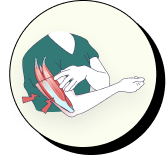
Weakness in the arms (37%)
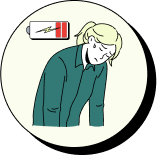
General fatigue (47%)

17.6% of patients with MG
were working only part time and 5.7% were on long-term sick leave despite 92.5% of them receiving treatment.2,*
* From a physician-reported survey of 456 patients living with MG with a mean time since diagnosis of 43 months.
-
- 1. Meisel A, Saccà F, Spillane J, Vissing J; MG Collegium Sub‐committee. Eur J Neurol. 2024;31:e16280.
- 2. Mahic M, Bozorg AM, DeCourcy JJ, et al. Neurol Ther. 2022;11:1535-1551.
- 3. Jackson K, Parthan A, Lauher-Charest M, Broderick L, Law N, Barnett C. Neurol Ther. 2023;12:107-128.